Growing Potatoes in Ireland

Growing Potatoes in Ireland

Potatoes are one of the most reliable and productive crops you can grow in Ireland. Thanks to the country’s cool climate, regular rainfall, and fertile soils, potatoes thrive in Irish fields and gardens. You can even grow them in containers on a patio. Less than one square metre of ground will easily produce 1kg of potatoes.

Even though Ireland is a small country the climate is, for example, very dissimilar from Wexford to Donegal, or Kerry to Wicklow, so timing and expectations should vary according to your local microclimate.

Why Potatoes Grow So Well in Ireland

Ireland’s climate is ideal for growing potatoes because we have:

  • Mild temperatures (extreme heat is rare)
  • Regular rainfall (reduces watering needs)
  • A long growing season

Timing is critical for a successful crop. This rule applies if you are growing several acres or a few plants your back garden.

Planting Schedule:

  • First early potatoes: Late February – March
  • Second early: March – early April
  • Maincrop: April

 Best Conditions for Growing Potatoes in Ireland

  • Soil: Well-drained, loose soil (avoiding heavy clay if possible)
  • pH: Slightly acidic (5.0–6.5)
  • Sunlight: Full sun (at least 6 hours daily)
  • Shelter: Protect from strong Atlantic winds
  • Raised beds work especially well in wetter Irish soils.
Step-by-Step: How to Grow Potatoes in Ireland

Popular easy growing varieties in Ireland include:

  • Rooster (very popular, known as the “housewives’ favourite”)
  • Kerr’s Pink (traditional Irish variety)
  • Golden Wonder (excellent for flavour)
  • British Queen (great for early crops)

Choose blight-resistant varieties if you a) want to grow an organic crop and b) are growing at home and you want to avoid spraying. Several varieties have been developed in recent years that are naturally resistant to blight. Some examples are –

  • Orla: An early salad variety that is high yielding, versatile, floury, and resistant to both leaf and tuber blight
  • Sarpo Mira: high yields of floury, pink-skinned potatoes.
  • Setanta: An Irish variety with excellent flavour, making great roast potatoes and chips
  • Alouette: An early maincrop red-skinned salad variety often used for chips and baking
  • Carolus: A second early variety with light yellow flesh, suitable for mashing, roasting, baking and frying
  • Kelly: a modern maincrop variety, top choice for homemade chips and roasting
  • Cara: a highly productive maincrop potato which is an excellent all rounder
  • Sevilla & Levante: Known as “Next Generation” varieties, these offer very strong resistance to blight

Start chitting in January–February:

  • Place you seed potatoes on trays in a bright, cool space
  • Let strong shoots develop

This helps them establish quickly in Ireland’s short spring window.

  • Time planting according to variety you are using
  • Depth: 10–15 cm
  • Spacing: 30 cm apart
  • Rows: 60–75 cm apart
  • Plant when soil is workable and not waterlogged

  • Rain often provides enough water
  • Only water during dry spells
  • Avoid overwatering (common mistake in Ireland)
  • Use a potash-rich fertiliser which encourages tuber growth
  • Avoid excessive nitrogen

  • Cover stems as they grow
  • Repeat every few weeks

  • Early potatoes: May–June
  • Maincrop: August–October
  • Harvest on a dry day to prevent rot during storage
  • Dig with a garden fork in your garden or rev up the mechanical harvester in a field
  • Store your potatoes without washing in a cool, dry, dark place
  • Storage below 4° is ideal for long term storage
  • Potatoes will hold for up to nine months in these recommended conditions

Growing Potatoes in Bags or containers

Container growing works extremely well due to:

  • Better drainage
  • Reduced disease risk

How:

  • Use growbags or large containers
  • Add soil gradually as plants grow
  • Keep in a sunny, sheltered spot
  • Water if the surrounding soil feels dry

Potato Blight in Ireland

We are all familiar with Ireland’s reliance on the high yielding potato crop as a staple food in the late 17th century. The wide availability of the nutrient dense potato helped to double Ireland’s population in just 60 years. But this over reliance was shattered by the arrival of the Phytophtora Infestans disease, more commonly known as blight, which made its way across the world from South America to North America, arriving in Europe in early 1845, and reaching Ireland by September of that year. The disease is caused by an airborne fungus-like spore. Its rapid destruction of a crop near ready for harvest was devastating and changed the course of Irish history. You can read more about the history of the potato here https://irishpotatofederation.ie/history/

Blight is still the biggest challenge for Irish potato growers due to our natural wet and humid conditions.

Signs of Blight:

  • Brown/black leaves
  • Rapid plant collapse
  • Rotting tubers

How to Prevent It:

  • Space plants well apart to encourage airflow
  • Avoid wetting leaves
  • Use resistant varieties
  • Remove infected plants immediately

Blight spreads fast in Ireland’s humid weather. Commercial farmers use weather forecasting tools to reduce the need for anti-fungal spray, and rotate crop planting areas to minimize soil-borne infection.

Other Common Problems which can affect potatoes

  • Slugs: thrive in damp soil
  • Wireworms: larvae bore holes into the tubers
  • Aphids: these insects deform leaves and transmit viruses
  • Waterlogging: causes rot
  • Wind damage: use sheltered planting areas

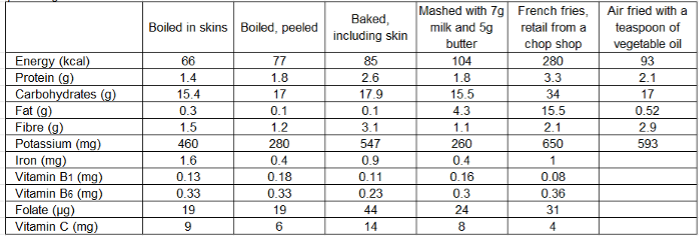
Potato Nutrition Facts

 Typical nutrient values of prepared potatoes per 100g

Sources
Food Standards Agency (2002). McCance and Widdowsons’s The Composition of Foods, 6th summary edition.
Food Composition and Nutrition Tables, 7th revised and completed edition 2008.
Fitz Scientific

Are Potatoes Bad for You?

No — but preparation matters.

Potatoes are far more than just a simple carbohydrate. When prepared properly, they become a rich source of resistant starch that supports gut health, blood sugar control, and overall wellbeing.

Many fad diets in the past labelled potatoes as fattening for the wrong reasons. Deep fried chips and the traditional addition of butter and gravy to Irish dinner plates supported the avoidance of potatoes in a calorie or fat controlled diet.

However, in the modern diet the opposite is true. Potatoes can be central to healthy meals and snacks when sensibly cooked and seasoned.

Healthy cooking options:

  • Boiled/steamed
  • Baked
  • Roasted
  • Air fried

Avoid: All deep-fried potatoes

The Benefits of Resistant Starch in Potatoes

Resistant starch is a form of carbohydrate that resists digestion in the small intestine. Instead of being broken down into sugar, it passes into the large intestine where it feeds beneficial gut bacteria.

Supports Gut Health

One of the biggest benefits of resistant starch is its effect on digestion.

  • Acts as a prebiotic, feeding good bacteria
  • Helps improve gut balance
  • May reduce bloating and support regular digestion

A healthy gut is linked to improved immunity and overall wellbeing.

Helps Control Blood Sugar

Unlike regular carbohydrates, resistant starch:

  • Slows digestion
  • Reduces spikes in blood sugar
  • Improves insulin sensitivity

This makes potatoes healthier than many people think — especially when eaten in the right way.

 May Support Weight Management

Resistant starch can help you feel fuller for longer.

  • Increases satiety
  • May reduce overall calorie intake
  • Supports healthy metabolism

This makes potatoes a good option for balanced diets.

 Supports Heart Health

By improving gut health and blood sugar control, resistant starch may also:

  • Help lower cholesterol
  • Support cardiovascular health

How to Increase Resistant Starch in Potatoes

The way you prepare potatoes makes a big difference.

Best method:

  1. Cook potatoes (boil or bake)
  2. Let them cool completely
  3. Eat them cold or reheat gently

Cooling transforms some of the starch into resistant starch.

Examples:

  • Potato salad
  • Cooked and cooled boiled potatoes
  • Leftover roasted potatoes

 FAQS

No — the main growing season is spring to autumn.

Yes — Ireland has ideal conditions, especially with good drainage.

Use resistant varieties, space plants well apart, and monitor regularly.

Yes — it’s one of the best methods due to wet conditions.